
Rethink & Reuse · UK household guide
A room-by-room low waste home
Your bin doesn't fill up evenly. The kitchen produces more than the bedroom, and the bathroom quietly generates more plastic than people expect. This guide works through a UK home one room at a time, so you can see what changes where — for flats, terraces, and houses alike, and it assumes you don't have a garden unless we say otherwise.
The order matters less than the pace. Do one room properly before starting the next.
- Eight rooms, one routine
- Swaps as items run out
- Written for UK homes
Kitchen
Start with the kitchen
The kitchen is where waste accumulates fastest and where changes stick quickest. Four swaps do most of the work. None of these need a specialty shop — most UK supermarkets sell loose vegetables, and refill stores now operate in most towns.
The four swaps
- Reusable produce bags for loose fruit and veg
- Beeswax wraps or glass containers instead of cling film
- A refillable water bottle you actually carry
- Cloths or loofahs instead of plastic-wrapped sponges

Plastic free food storage
Glass containers with lids, beeswax wraps for cheese and half-cut veg, and a cloth over a bowl. Beeswax wraps last about a year with cool-water washing and a refresh in the oven; skip the dishwasher and hot water if you want them to survive longer.
Composting food scraps at home
Cooked food, tea bags, and coffee grounds fill a caddy quickly. A small lidded bin on the counter, emptied into a council food-waste collection or a balcony wormery, handles most kitchens without a garden. If neither is available, keep the caddy going and freeze scrap until you find a drop-off.
The goal is to close the loop: buy less packaging, use what you buy, and compost what you can't. For the deeper version — storage, food waste, and eco friendly kitchen cleaning — the Zero Waste Kitchen page covers zero waste kitchen swaps in more detail.
Bathroom
The bathroom is the quiet offender
Bathroom waste is easy to miss because it is mostly plastic bottles and tubes, produced one at a time. Swapping to bar soap, bar shampoo, and a refillable deodorant removes most of it — and this room takes about a month to convert because you replace items as they run out, not all at once.
Swap list
What usually goes first
- Bar soap and bar shampoo replace bottled body wash and shampoo.
- Refillable deodorant removes the plastic stick-and-case cycle.
- Bamboo toothbrushes and toothpaste tablets cover the rest.
- A toothpaste in a recyclable tube is a reasonable middle step.
Before you bin it
Check what your council accepts
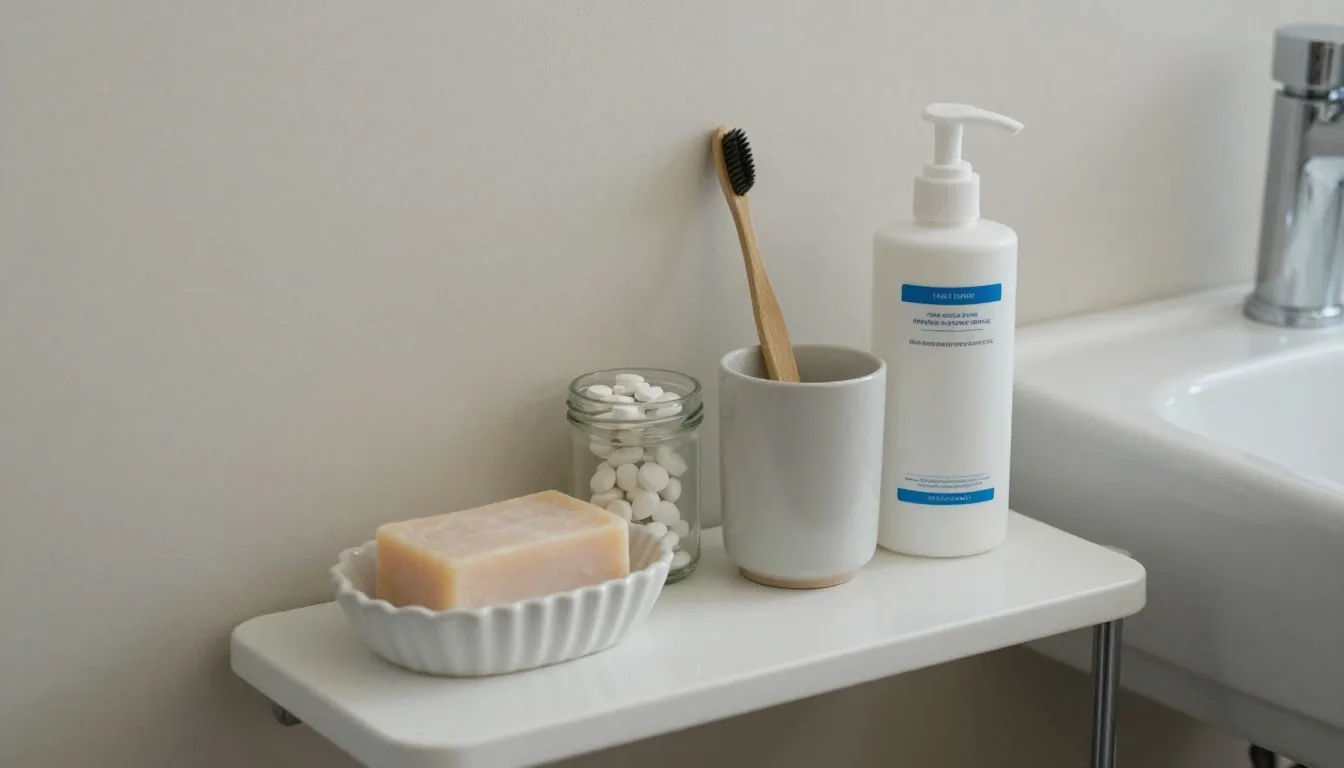
Plastic pumps usually go to general waste, while the bottle itself may be recyclable. Bamboo toothbrushes should have their bristles pulled out before the handle goes anywhere near a compost bin or garden waste collection.
Utility and cleaning
Laundry, and cleaning without single-use plastic
Two weekly routines that quietly decide how much plastic and how much lint leaves your home.
Wash cooler and shorter
Lower temperatures and shorter cycles shed fewer microplastics from synthetic fabrics, and cost less to run. A guppy bag or an inline filter catches what does come off.
Every load
Refill the detergent
The plastic in this room mostly comes from detergent bottles, which refills solve. Detergent sheets travel well and store flat. Soap nuts work for some households and not others — try a small pack before committing.
Every wash
Retire the dryer sheets
Dryer sheets are largely unnecessary; wool dryer balls work better and last years. If you tumble dry, clean the filter each time — it helps the machine run efficiently and reduces energy use as well as lint.
Tumble loads
Four things that clean most of a house
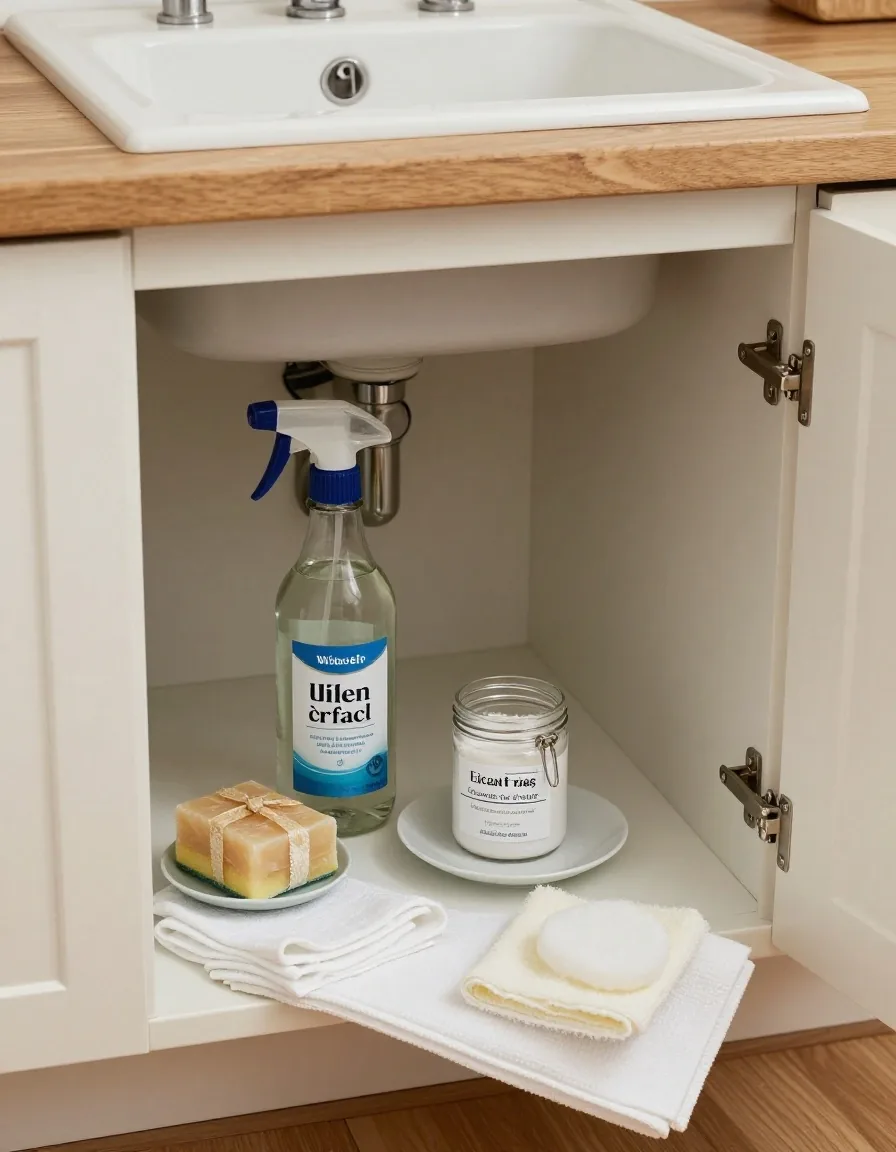
White vinegar, bicarbonate of soda, a bar of castile soap, and a few cloths handle most jobs. Refill shops sell concentrates you dilute into a bottle you already own, and that bottle lasts years. Avoid products labelled "eco" that arrive in virgin plastic with a plastic pump — the refill model is the point, not the label.
Two small habits add up here because cleaning is a weekly routine: microfibre cloths shed microplastics when washed, so cotton or cellulose alternatives are worth considering if that matters to you, and cutting sponges into halves extends their life.
Bedroom and wardrobe
Repair first, rehome second, repurpose third
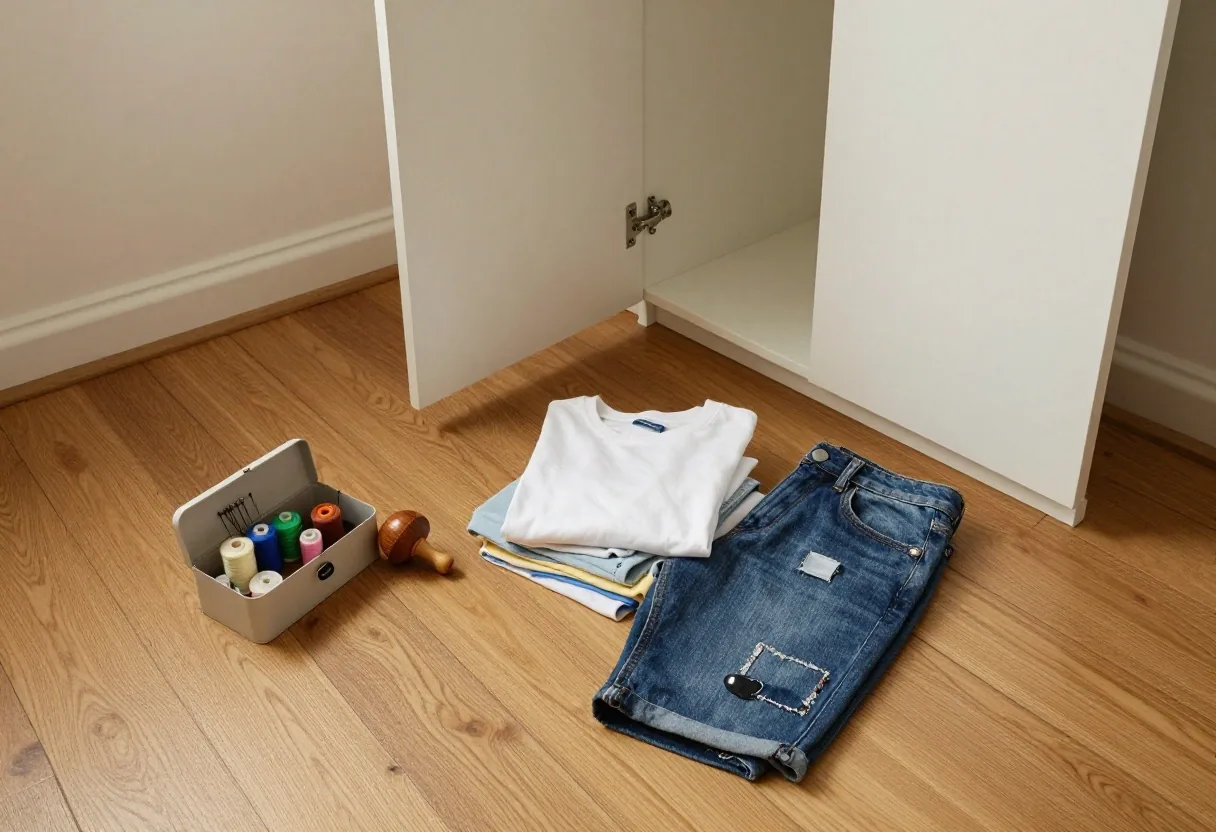
Textiles are one of the largest categories of household waste sent to landfill, and most of it was wearable when it went out. Repairing a button, darning a sock, and patching a knee keeps clothes in use for years. Charity shops, clothing swaps, and online resale platforms keep them circulating after that.
What to do with a worn t-shirt
Repurposing old clothes you've written off
Worn cotton t-shirts make excellent cleaning cloths and will not shed microplastics the way synthetic rags do. The same fabric cuts into simple projects with no sewing machine: a braided rug, a dishcloth stack, a no-sew tote.
The upcycling guide has creative upcycling ideas for repurposing old clothes, including a no-sew tote from a t-shirt. If you buy new, look for natural fibres so end-of-life options stay open.
Hallway, entrance, everyday carry
Where the routine is either supported or undermined
The hallway is not a room in the usual sense. It is the place habits either work or break. Keep your reusable bags by the door, not in a cupboard, because the bag you leave at home is the bag you will forget. A small kit by the door — a produce bag, a water bottle, and a coffee cup if you use one — saves decision-making every time you leave.
Shoes can be re-soled and repaired at most high streets. Leather especially lasts decades with care, and a cobbler costs less than a replacement pair.
Coats can be cleaned rather than replaced. A wash, a re-proofing spray, and a stitched seam extend the life of a winter jacket by several seasons.
Learning to fix a dripping tap, replace a washing machine filter, or reattach a hinge saves money and avoids replacements. YouTube has reliable tutorials for most household repairs.
For rented properties, ask the landlord or letting agent before making changes. Most will approve simple repairs that protect their asset.
Where a fix is beyond you, a local repair cafe — many UK towns run them monthly — handles small electricals, bikes, and textiles. The waste savings here are large because appliances and furniture are heavy and rarely recycled well.
Moving in, moving out
Second-hand furniture, and the fortnight before you leave
Moving is when most households dump the largest volume of usable goods. If you are setting up a home, second-hand furniture from charity shops, Facebook Marketplace, and Freecycle is cheaper, better made, and already exists. If you are moving out, list items a fortnight before you leave — most will be collected.
Labels
Reading the labels without the greenwash
Recyclable, biodegradable, compostable, and eco friendly are not regulated in the same way across the UK, and they do not mean what shoppers assume. A compostable cup usually needs industrial composting, which most councils do not offer. Recyclable depends entirely on whether your local authority accepts that material. On food, the same thing applies.
The honest approach is to check your council's recycling page before trusting the label. Labels are a guide, not a guarantee. For packaging, bulk buying, and plastic free alternatives, the Sustainable Shopping Guide covers sustainable shopping tips and how to buy in bulk.
If you are building up a first set of tools — reusable produce bags, a refillable bottle, cloths, glass containers — the Zero Waste Starter Guide lists zero waste tips for beginners and a zero waste starter kit in the order they tend to stick. It complements this room-by-room guide: this one takes the rooms in turn; that one takes the first steps in order.
Before you start
Three questions that come up most often when households begin a low waste routine.
Which room should I start with?
Usually the kitchen, because waste there is high-frequency and the swaps pay for themselves. If your bathroom produces more plastic than your kitchen, start there instead. The logic is the same either way: pick the room where one small change repeats every day.
Do I need to replace everything at once?
No. The standard advice is to replace items as they run out, which spreads the cost and lets you test each swap before committing. It also means you never buy a duplicate of something you already own.
Are refill shops more expensive?
Sometimes per litre, but usually less per use once you stop buying the bottle each time. Prices vary by shop and product, so it is worth checking locally before deciding a refill is out of reach. Bring your own container where the shop allows it.
Next step
Pick one room and start this week
The pace matters more than the order. If you want to flag something in this guide, or ask about the room we covered most lightly, the editors answer Monday to Friday, 9:00 AM to 6:00 PM, and Saturday, 10:00 AM to 2:00 PM.