Zero waste living, sorted for UK homes

+44 20 7946 0821 [email protected]

Creative upcycling ideas

Upcycling projects for everyday items

Upcycling is the least glamorous and most satisfying part of low waste living. Instead of buying a new spice rack, you turn a jar into one. Instead of replacing a shirt with a hole, you turn it into cleaning cloths or a tote bag. Everything below is sorted by roughly how much effort and equipment it asks for, so you can start at the kitchen table rather than in a workshop.

Jars · Clothes · Furniture No workshop required Repair before repurpose
A wooden chair joint clamped and drying at a workbench while the paint cures

The one rule of thumb

Upcycling vs recycling, and why it matters

The upcycling vs recycling difference is mostly about energy and quality. Recycling breaks an item down to make something new; upcycling keeps the item intact and gives it a second job. If you are choosing between the two, upcycle first, recycle what you cannot upcycle, and refuse what you do not need in the first place.

Upcycle first

Keeping the object whole

  • A glass bottle upcycled becomes a vase, a lamp base, or a candle holder.
  • Far less energy goes into reusing the shape than into remelting it.
  • You can do it tonight, without depending on your council's collection rules.

Recycle as fallback

Breaking it back down

  • The same bottle recycled becomes cullet, which is melted and reformed.
  • Most recycling degrades material each cycle, so quality drops over time.
  • It depends on what your local service actually accepts and collects.

The beginner's material

Glass jars

Jars are already leak-proof, food-safe, and free with almost every condiment, which is why they are the best place to start.

Prepare

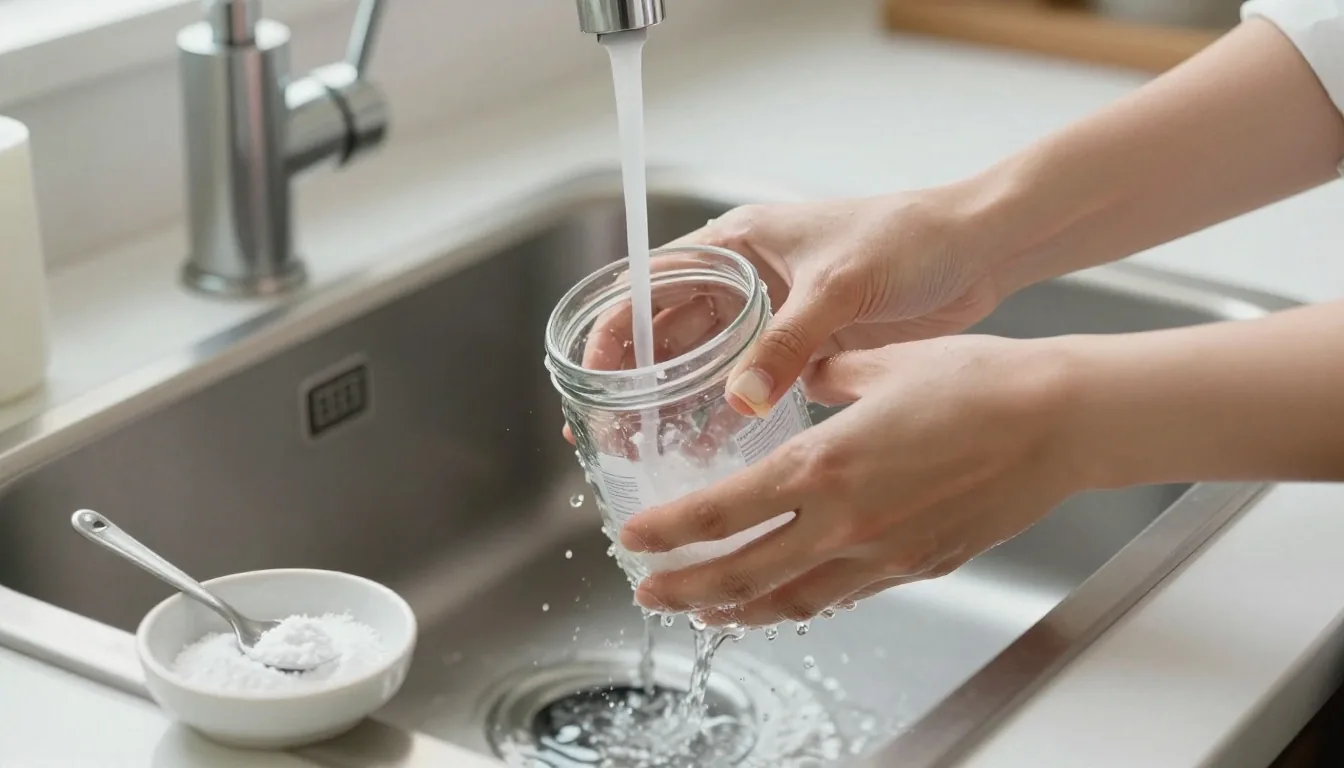
Rinse the label off with warm water and a spoon of bicarbonate of soda, then peel. Sticky residue comes off with oil or nail polish remover.

Small jars

Spices, paper clips, seeds, loose tea. A row of matching jam jars is one of the cheapest zero waste kitchen swaps you can make.

Large jars

Dry goods, leftovers, overnight oats. A jar with a tight lid is freezer-safe, unlike most plastic containers, which crack.

Going further

A jar becomes a desk tidy, a candle holder, or a propagation station for plant cuttings. The only tools you might need are a label remover and a marker.

Watch for

Chipped rims. A hairline crack near the lip is the one case where a jar is better recycled than reused, especially if you plan to freeze it.

Hands rinsing and peeling a label from a glass jar at a kitchen sink
Warm water and a spoon of bicarbonate of soda is usually enough to lift a stubborn label in about twenty minutes.

Repair before repurpose

Old clothes

Clothing is one of the biggest waste categories households send out, and most of it is wearable when it goes. Repurposing old clothes is the last step in a chain, not the first, because a garment someone else can wear is worth more than one you have cut up.

  1. First

    Repair. Usually a button, a seam, or a hem. A basic sewing kit covering five skills — running stitch, backstitch, hemming, sewing a button, darning — opens up most of what follows.

  2. Second

    Rehome. Charity shops, clothes swaps, or online resale. If the item is wearable, this is a better outcome than cutting it up.

  3. Third

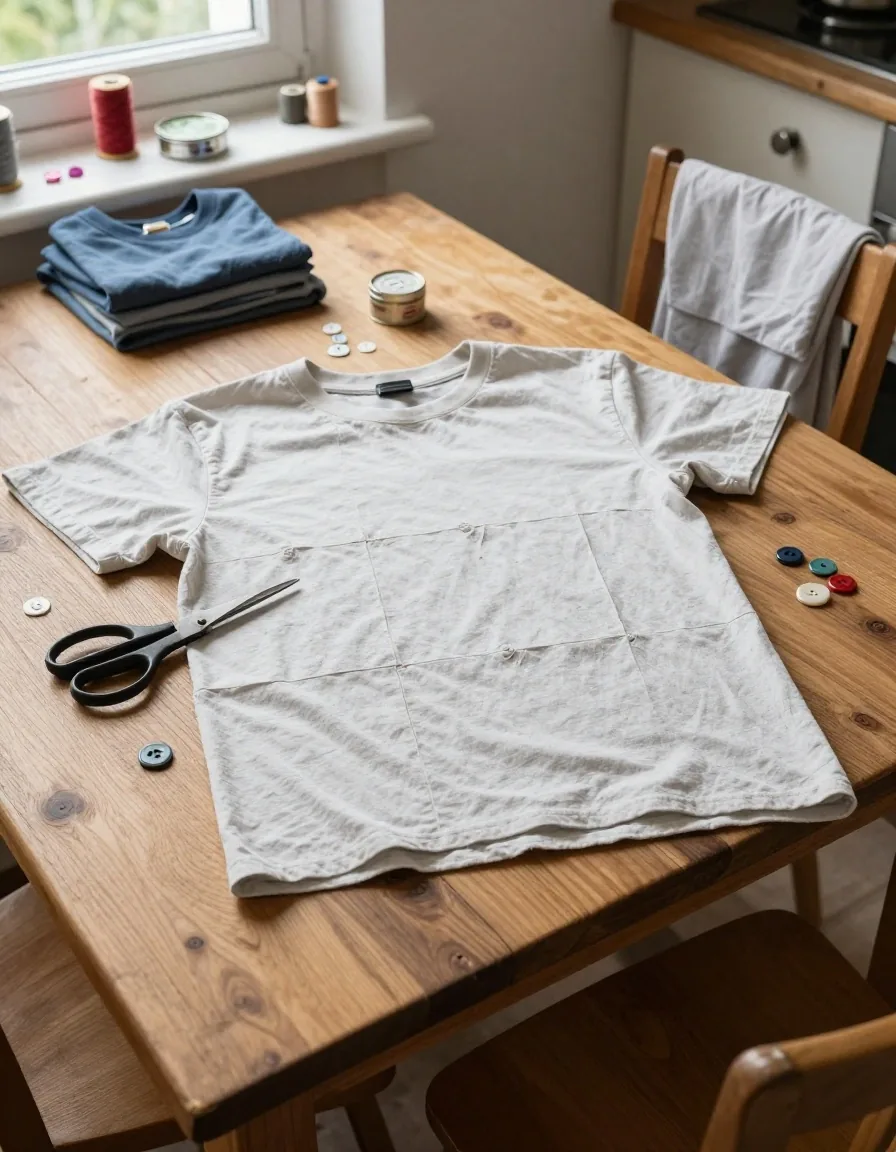
    Repurpose. Worn cotton t-shirts make excellent cleaning cloths and will not shed microplastics like synthetic rags. Jeans become patches, aprons, or sturdy tote bags. Knitwear that has felted in the wash becomes cushion covers or coasters.

A worn t-shirt being cut into cleaning cloths on a kitchen table beside a sewing tin

An old cotton t-shirt cut into squares and stacked is about fifteen minutes of work and replaces a pack of shop cloths.

Scissors, glue, patience

No-sew projects you can start tonight

If you do not sew, there is still plenty to do. These are less about skill and more about willingness to try. The first one always looks worse than the second, so start with something you do not care about failing at.

T-shirt tote bag

Cut the sleeves and neckline off, turn the shirt inside out, and tie the bottom hem in two tight knots. No needle, no thread, about five minutes.

Scissors + two knots

Jar pen pot

Glue a strip of leftover fabric or paper around the middle of a clean jar. A wider jar with a heavy base is less likely to tip when it holds pens and scissors.

Fabric strip + craft glue

Frame to noticeboard

An old picture frame with the glass removed becomes a noticeboard once you cut a sheet of cork to fit and glue it to the backing.

Cork sheet + hot glue

Crate to shoe rack

A wooden crate turned on its side gives you one row of shoes and a flat top for keys. Stack two for a hallway that never had a shelf.

Sandpaper + a wipe-down

Tin can utensil holder

File the cut rim smooth before you use it, then wrap the outside in a strip of paper or linen. Never leave a raw edge on a can you will reach into daily.

Metal file + wrap strip

Jar propagation station

Fill a clean jar with water, drop in a cutting, and leave it on a bright sill. Roots usually show within a couple of weeks, and the jar does the work.

Jar + tap water

Worth a weekend

Furniture you can save with a weekend

Furniture is where upcycling saves the most money and prevents the most waste. A wooden chair with a wobbly leg needs glue and a clamp. A chest of drawers with a broken handle needs a replacement, not a new chest. A solid table with a scratched top needs sanding and re-oiling, which costs less than a takeaway.

The materials are cheap: sandpaper, wood glue, wax or oil, and a brush. Check for woodworm and structural damage before starting, and look underneath before you commit an afternoon to it. If the piece was free and turns out to be beyond repair, you have lost nothing but time.

A short checklist

What to check before you sand anything

A free piece of furniture costs you an afternoon either way. Five minutes of inspection tells you whether that afternoon is worth spending.

Woodworm. Small round exit holes and fine dust under the legs mean treat it or leave it. Do not bring it into a warm room untreated.

Joints. A wobble that tightens under hand pressure is glue-and-clamp work. A joint that moves freely is structural damage.

Surface finish. Veneer that has lifted or bubbled cannot be sanded back. Solid timber with a scratched top can.

Weight and material. Heavy hardwood is worth saving. Fibreboard that has swollen from damp is not.

Cracked mug to plant pot

One drainage hole and it is a small pot for herbs. Keep it indoors or bring it in over winter.

Old wooden spoon to plant marker

A marker pen on the handle names the row. Wood weathers, so re-mark it each season.

Wine crate to spice rack

Slatted crates hold jars well. Check the wood is dry and free of spills before it goes near food storage.

Glass bottle to soap dispenser

A pump from an old dispenser usually fits a standard bottle neck. If it does not, keep the bottle as a vase instead.

Used coffee grounds to body scrub

Mix with a little oil, use it within a few days, and keep it out of the drain in large amounts.

Small and unglamorous

Kitchen and utility upcycles

The kitchen is full of small opportunities that do not need planning. Taken one at a time they look trivial. Taken together they cut what leaves the house, and they give you practice, which is the whole point. The more of these you do, the easier the next project feels.

Second-hand first

Getting tools and materials without buying new

Most upcycling tools can be borrowed or bought second-hand, which is the point of the whole exercise. The idea is to make from what already exists, so start with the materials you have and buy only what you cannot find.

Tools

Where to find them

Charity shops carry sewing kits, hand tools, and sometimes power drills.

Tool libraries exist in many UK cities and lend for a small fee.

Freecycle, Facebook Marketplace, and Olio move unwanted materials between neighbours.

Materials

What is usually free

Old bedding and curtains produce far more yardage than a first project needs.

Paint leftovers from neighbours will cover small pieces and test patches.

Jars, tins, crates, and pallets arrive free with the things you already buy.

Know when to stop

When to stop upcycling and let go

Not everything should be saved. The point is not to hoard. It is to keep useful things in use, and to send the rest to the right place.

Let it go instead

  • Upholstered furniture with signs of pests or damp should go, not be re-covered.
  • Plastic that has gone brittle will crack under load and is not worth storing anything heavy in.
  • Cracked glass with a sharp edge is not worth the risk, however good it looks.
  • Some items are worth more as parts than as a whole object, so take the parts and pass the rest on.

You do not owe an object a second life just because it is old. Repair, rehome, and upcycle where it makes sense. When it does not, dispose of it properly and move on.

Questions we get

If your question is not here, the editorial team answers email on weekdays and Saturday mornings.

Do I need to be good at crafts?

No. Most projects on this page use scissors, glue, and a bit of patience. Start with a no-sew project and work up as your confidence grows.

How do I remove labels from glass jars?

Soak in warm water with a spoon of bicarbonate of soda for twenty minutes, then peel. Sticky residue comes off with oil or nail polish remover.

What is the best way to repurpose old clothes?

Repair first, rehome second, repurpose third. If the item is wearable, a charity shop or swap event is a better outcome than cutting it up.

Is upcycling always better than recycling?

Not always, but it usually uses less energy and keeps the material's quality. Recycling is the fallback when upcycling is not practical for that object.

Where does this page fit in the rest of the site?

The Zero Waste Starter Guide covers the wider habit shifts, the kitchen guide covers food and storage, and the shopping guide covers what to buy less of. This page is the making side of all three.

Where to go next

Pick one project and start this week

Rethink & Reuse is an independent UK editorial resource for low waste households. We write practical guides, not promises. If you want to go wider than one jar, start with the starter guide, or email the editors and tell us what you are trying to save.