
Zero waste living / start where you are
Your first steps in zero waste
The phrase sounds like an absolute, and absolutes are exhausting. In practice, it's a direction of travel: fewer single-use items in, fewer things out to landfill. This guide is for people who've watched a few videos, felt vaguely guilty, and now want something concrete to do on a normal Tuesday.
It assumes you live in a UK home, probably rent, probably don't have a garden, and don't want to spend a weekend painting labels on mason jars. We'll cover the five principles, the swaps worth making first, what to skip, and how to keep going past week two.
Order of importance
The five principles, plainly stated
Recycling sits fourth on the list, not first. Most people start there because it's the familiar one, and that is exactly why the order matters.
The zero waste movement is usually summarised as five R's, and they are in order of importance for a reason. Read them top to bottom, then decide what to change first.
-
Refuse
Refuse what you don't need
Decline the free pen, the straw, the extra bag. This is the only step that produces no waste at all, which is why it sits first.
-
Reduce
Reduce what you do buy
Fewer items bought means fewer items discarded. Reducing a purchase beats recycling its packaging, every time.
-
Reuse
Reuse what you already own
This is where most household savings live. Jars, bags, clothes, furniture — reusing everyday items costs nothing and skips the shop entirely. It is also the doorway to creative upcycling ideas when something stops being useful as itself.
-
Recycle
Recycle what you can't reuse
The upcycling vs recycling difference is worth holding on to: recycling breaks a material down and starts again, so it belongs after you've used the thing as it is. Refusing a plastic bag beats recycling it later.
-
Rot
Rot the rest
Composting food scraps at home closes the loop on the part of your bin that was never really rubbish. It comes last because everything above it should already have happened.
Hold that ladder in your head when you pick your first swaps. It sorts the useful changes from the decorative ones faster than any checklist.
Before you buy anything
What your bin actually contains
A bin audit sounds grim. It takes twenty minutes and it replaces guesswork with a plan. Empty last week's general waste onto a sheet of newspaper and sort it into piles: food, soft plastics, hard plastics, paper, glass, textiles, everything else. Photograph the result before it goes back.
In most UK homes, food and soft plastic dominate. That photograph is your priority list, and it is more useful than any generic starter advice, because it tells you which principle to attack first.
Reading the result
-
Food wins the pile? Meal planning and composting will shrink your bin more than any reusable bottle.
-
Soft plastics lead? Your problem is what you buy, not what you throw away.
-
Cardboard and tins? You're already sorting well; focus your effort elsewhere.
The short shopping list
Starter swaps that work in rented homes
You don't need to modify the property. A few cheap purchases do most of the work — and if you already own any of these, use them and skip the buy.
Two reusable produce bags
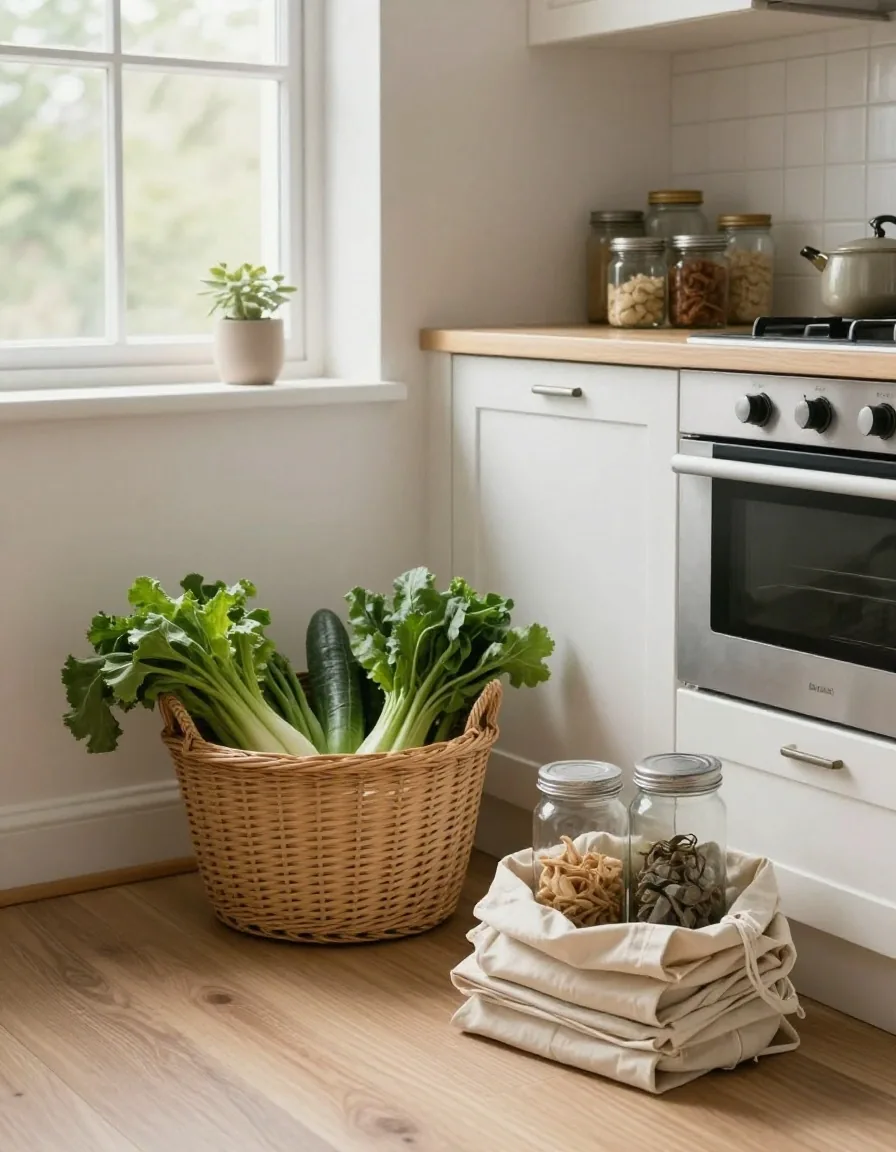
A reusable produce bags guide in practice is short: enough for loose veg on a normal shop, light enough to stay in your coat pocket, washable when they get grubby.
Refuse and reduce
A wrap or two, plus glass containers
One beeswax wrap, or a nesting set of glass containers, covers most leftovers. Both count as plastic free food storage and both outlast a roll of cling film by years.
Reuse
A bottle you'll actually carry
The test is not how good it looks on a shelf; it's whether it survives a commute in a rucksack. If it doesn't, it becomes the thing you left at home.
Reuse
A refillable soap dispenser
Fill it from a refill station or a concentrate, and you've cut a steady stream of plastic pumps. Keep the pump; only the liquid gets replaced.
Refill
Cloths instead of paper towels
A stack of cheap cloths handles spills, wiping and dusting. Wash them with the towels and the replacement cost drops to almost nothing.
Reduce
What this set usually costs
A full first set usually lands under twenty-five pounds, and less if you shop second-hand or charity shops for the glass and cloths. Buy the set in stages, not on one Saturday.
Buy only what you'll use weekly
Save your money
The swaps that aren't worth it yet
A swap is worth making when you'd have used the disposable version anyway. If you never get takeaway coffee, a reusable cup isn't a swap; it's a souvenir.
-
The compostable phone case. It solves a problem you replace every two years at most.
-
The bamboo cutlery set that spends its life in a kitchen drawer.
-
The fifteen-piece starter kit from a brand you found on social media. It buys you the feeling of starting, not the habit.
-
Do put that money toward something you'll reach for weekly. That's the whole test.
Usually the biggest win
Food waste is where most bins give way
UK households throw away a substantial share of the food they buy, and most of it was edible when it went in the bin. The fixes are unglamorous and they cost nothing. This section alone will shrink your bin more than any product on the market.
In the kitchen
Five habits that beat a gadget
Plan three dinners you'll actually cook, then shop for those.
Keep a use-first shelf in the fridge for anything about to turn.
Freeze bread before it goes stale, sliced, so you take out what you need.
Make stock from vegetable trimmings and keep it in the freezer.
Learn one flexible recipe, like a frittata or fried rice, that absorbs whatever's left.
Two kitchens, two routes
Composting food scraps at home
With outdoor space
A tumbling composter or a dalek bin handles fruit and veg peelings, tea bags (check they're plastic-free), coffee grounds, eggshells and garden clippings. Turn it occasionally and leave it alone the rest of the time.
In a flat
A bokashi bin ferments everything, including cooked food, dairy and small amounts of meat, and fits under a sink. You get a liquid feed to dilute for plants and a pre-compost to bury or add to a council collection.
Wormeries
A third option, producing excellent compost, but they need more attention through winter. Worth it if you're already comfortable looking after living things.
Any of these beats sending food to landfill. If none of them fit your home, a council food waste collection still counts.
Four ingredients
Eco friendly kitchen cleaning without the plastic trail
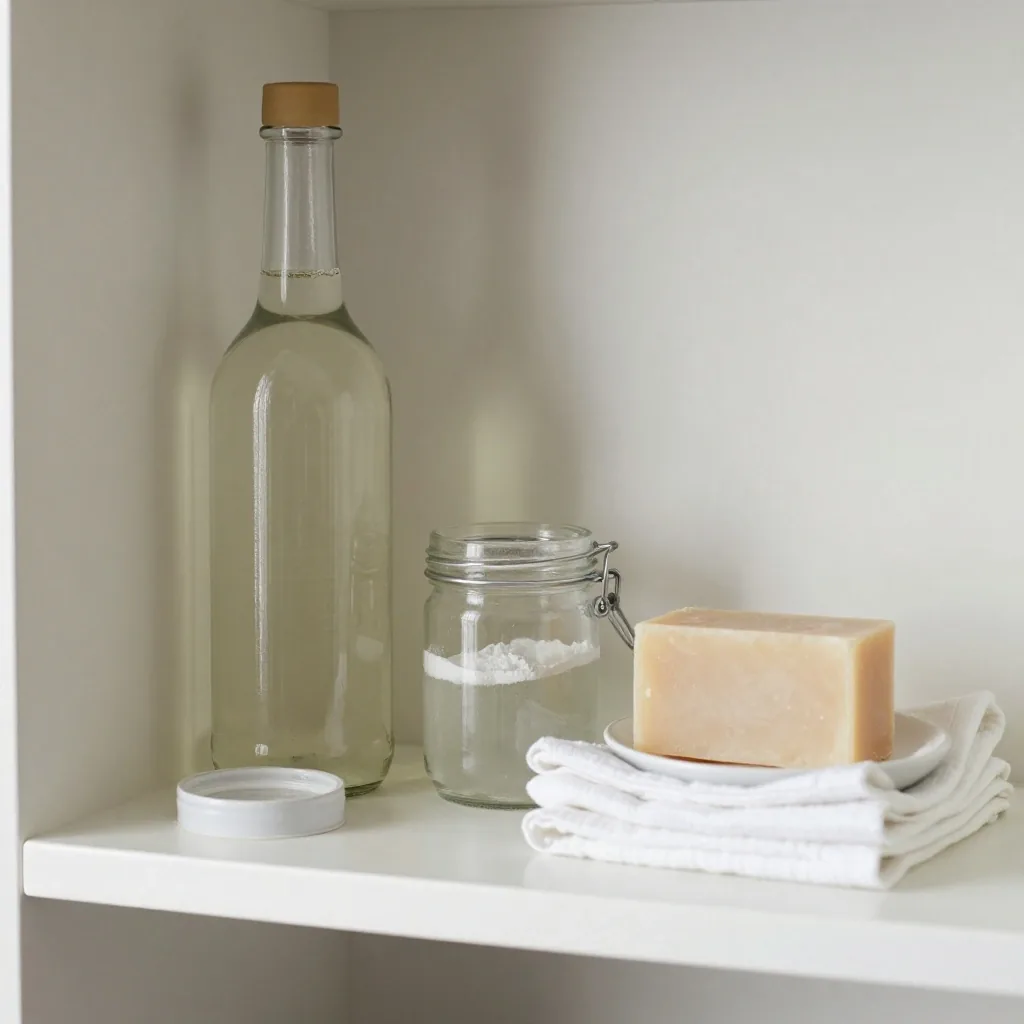
Most cleaning jobs in a normal home come down to four things, and none of them arrive in a bottle with a plastic pump.
-
White vinegar
Handles limescale on taps, kettles and shower heads. Dilute it for everyday wiping; leave it neat on a limescale ring for a few minutes.
-
Bicarbonate of soda
Your scouring powder for sinks, hobs and stained mugs. A little water turns it into a paste that lifts burnt-on marks without scratching.
-
Castile or Marseille soap
Cuts grease on surfaces and dishes. A bar lasts for months and the wrapper is paper, which is already one plastic free alternative you don't have to think about again.
-
A couple of cloths
One for surfaces, one for glass. Wash them with the rest of the laundry rather than replacing them.
If you'd rather buy ready-made
Refill shops in most UK towns sell cleaning concentrates you dilute at home, and the bottles last years. Compare how the refill works before you compare the label. A product carrying an eco sticker in a virgin plastic bottle with a plastic pump is still a single-use purchase; the refill model is the point, not the wording on the front.
The honest part
Keeping the habit past week two
The first fortnight is easy because it's novel. The third week is when most people slip.
Two things help: reduce the friction, and reduce the number of decisions. Keep your reusable bags by the door, not in a cupboard. Keep one reusable bottle filled and visible. Pick two swaps, not eight, and don't add a third until both are automatic.
When you do slip, treat it as information about which swap wasn't set up well, rather than as failure. The people who stick with sustainable lifestyle habits over a year aren't more disciplined than anyone else. They've made the easy choice the default.
Set-up that survives a bad week
-
Bags live by the door
Anything stored in a cupboard is a decision you'll skip when you're late.
-
Two swaps at a time
Add the third only when the first two happen without thinking.
-
Re-audit the bin
Repeat the newspaper sort after a month. It shows which swap is doing the work.
Once the basics are routine
Where to go next
Two paths open up: go room by room, or dig into the bin's biggest offender. Pick whichever matches the pile you saw on your newspaper.
- Low Waste Home Guide Bathroom, laundry and cleaning, room by room, with the swaps that hold up in a rented flat.
- Zero Waste Kitchen Storage, composting and shopping — plus zero waste kitchen swaps worth the cupboard space.
- Sustainable Shopping Guide How to buy in bulk, what plastic free actually means on a label, and where to look first.
- Upcycling Projects & Ideas Simple upcycling projects that need no special tools, from glass jars to repurposing old clothes.
Common questions
Before you start
Do I need to compost to call it zero waste?
No. Composting is one of the five principles, but plenty of people in flats without garden access send food waste to council collections instead. That still counts, and it keeps the material out of landfill either way.
How long before I see a difference?
After four to six weeks of consistent swaps, most households notice the bin filling more slowly. Repeating the bin audit is the clearest way to see the change, because it compares like with like instead of relying on a feeling.
Can I do this on a tight budget?
Yes, and the cheapest swaps are usually the ones that save money: cloths instead of paper towels, freezing bread, cooking what's already in the fridge. Skip the kits and buy only what you'll use weekly — a zero waste starter kit built slowly works better than one bought in a single afternoon.
How do I look after a beeswax wrap?
Keep it away from raw meat and hot pans, wash it in cool water with a little soap, and let it air dry flat. With that care a wrap lasts about a year, then goes on the compost heap once the wax has worn thin.
Where does upcycling fit in, compared with recycling?
Upcycling keeps an object in use as something new — glass jars become storage, old clothes become cleaning rags or cushion covers. Recycling breaks the material down to make it again. Both are useful, but upcycling saves the energy of the whole remanufacturing step, which is why it sits above recycling on the ladder.
Next step
Pick two swaps and start this week
That's the whole method. Audit the bin, choose two changes, and let them become automatic before you add another. If you'd like help applying any of it to your own home, the editors at Rethink & Reuse are happy to point you the right way.
Rethink & Reuse · 42 Bramley Road, London, N14 4HD · Monday to Friday 9:00 AM – 6:00 PM, Saturday 10:00 AM – 2:00 PM