Sustainable shopping tips for UK households
How to shop with less waste
Buying less is the most effective waste strategy, and buying differently is the second. This guide is about the second: how to choose lower-waste options when you do need to buy something. It covers bulk buying, plastic free alternatives, refill shops, and how to spot greenwashing on a label.
The premise is simple. Most packaging is optional, and most “eco” labels are unregulated — knowing which is which saves money and waste. The examples and rules of thumb below match what you will see on a British high street or supermarket aisle.
The hierarchy
Refuse, reduce, reuse, recycle
The same order that works for a kitchen bin works for a shopping basket. The most sustainable purchase is the one you skip.
-
Refuse
Skip what you do not need. A reusable produce bag in your coat pocket replaces the plastic one at the checkout counter, and there is nothing to store afterwards.
-
Reduce
Buy the amount you will actually finish. A small bag of rice is not waste if you eat it all; a five-kilo sack is waste if half spoils in the cupboard.
-
Reuse
Second-hand usually beats a new “eco” version, because the new one still used resources to be made. Old furniture is often solid wood and old clothes are often natural fibres.
-
Recycle
Only once the first three are spent. If second-hand is not possible, choose the version with the least packaging and the longest usable life.
This is not about being perfect. It is about not confusing a green label for a green outcome — which is the difference between upcycling and recycling as a habit, and picking one out of guilt at the shelf.
Bulk buying
How to buy in bulk without buying too much
Bulk buying works when the item is shelf-stable and you will use it before it spoils. Dry goods such as rice, pasta, oats, and pulses are ideal. Spices, coffee, and tea also work. Perishables do not, unless you will freeze them.
Refill shops sell by weight, so you can buy exactly what you need rather than a fixed pack size. Supermarket bulk sections work the same way. The mistake is buying five kilos of something because it was cheap per unit, then throwing half away.
The right amount is what you will use in a reasonable timeframe. Bulk buying saves money and packaging, in that order — and only when the maths works.
- Rice, pasta, oats and pulses keep for months in a sealed jar.
- Refill weights let you buy 200g of a spice you rarely use.
- Freeze the surplus before it turns, if you over-bought.
- Skip a bulk deal on salad leaves, soft fruit or fresh bread.
Reading labels
Reading labels without being fooled
Recyclable, biodegradable, compostable and eco-friendly are not regulated the same way across the UK, and they do not mean what shoppers assume. A compostable cup usually needs industrial composting, which most councils do not offer.
Recyclable depends entirely on whether your local authority accepts that material. Soft plastics, for instance, are collected at some supermarkets but not by most councils. Biodegradable says nothing about how long it takes or what it leaves behind.
The honest approach is to ignore the front of the pack and check your council’s recycling page for what is actually accepted in your area. Labels are a starting point, not a guarantee.
What the words claim
Front-of-pack words are marketing, not a standard. Two packs can print the same claim and behave completely differently in your bin.
What your council accepts
Collection rules vary street by street. Check the local list before you bank on a kerbside bin taking the wrapper.
Swaps that stick
Plastic free alternatives that actually work
Some plastic free swaps work well and some do not, and the difference is usually whether you will use them. The test is simple: would you have used the disposable version anyway? If yes, the swap is worth it.
Beeswax wraps usage and care is a good example of a swap that pays off only if it lives where you actually wrap food — next to the chopping board, not in a drawer.
Bar soap, bar shampoo and solid deodorant replace bottles directly. Glass containers and beeswax wraps handle food storage. Refillable cleaning concentrates cover most kitchen and bathroom cleaning.
Bamboo toothbrushes usually carry plastic bristles, so only the handle breaks down. Compostable cutlery in a cafe bin is rarely home compostable, whatever the lid says.
Many eco products still arrive boxed in plastic tape and bubble wrap from the warehouse. Check what turns up at the door, not only what was promised on the page.
Refill shops
Refill shops and how to use them
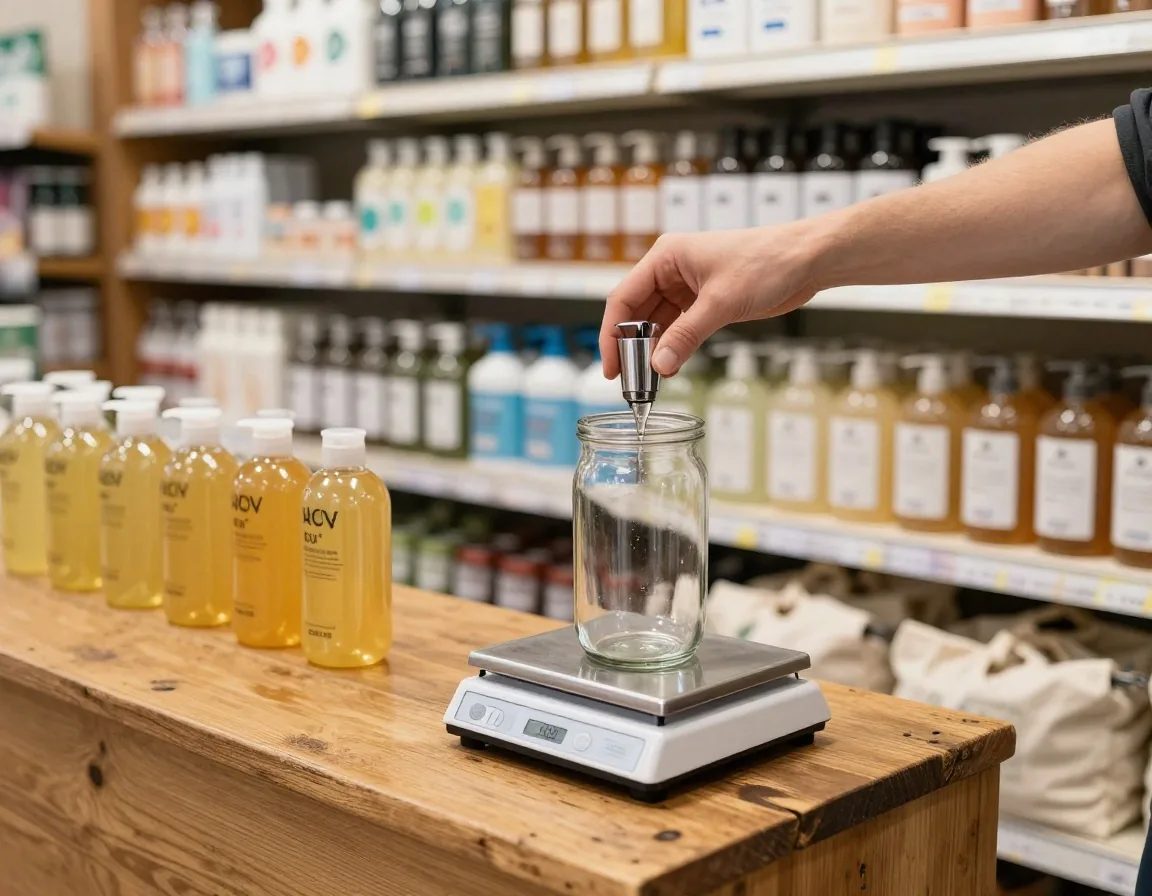
Refill shops exist in most UK towns now, and they sell everything from dried goods to shampoo to cleaning concentrate. You bring your own containers, weigh them, fill them, and pay by weight.
The first visit takes longer than a supermarket trip because you are learning the layout. After that, it is faster. Bring clean, dry containers, and take a photo of the weight on the scale if the shop uses a sticker system.
Prices are per gram or per millilitre, which makes it easy to buy exactly what you need. Not every product is cheaper than a supermarket, but most are competitive once you factor in the container you are not buying.
Second-hand first
Clothes, furniture, and the second-hand rule
Second-hand works for almost everything. Clothing from charity shops, swaps, and resale apps. Furniture from marketplace listings, free share groups, and charity shops. Books, tools, and kitchenware from the same places.
The main friction is time; second-hand shopping takes longer than clicking buy. The compensation is that you find things you would not have found new, and you spend less. If you buy one new thing this month, check whether a second-hand version exists first.
See the Upcycling Projects & Ideas hubReusing everyday items
Before you replace it, refill it
Glass jars from sauce or jam come clean in hot soapy water and take dry goods the same day. Old shirts become cleaning cloths. Takeaway tubs become freezer portions. None of this needs a special kit.
The point is not to hoard. Keep the containers you will fill this month, and pass the rest on to someone who will use them rather than letting a cupboard fill up.
See the Low Waste Home GuideA lower-waste week
Shopping lists for a lower-waste week
None of this requires a specialty shop, and most of it is cheaper than the packaged version. It does require a plan and a couple of containers in your bag.
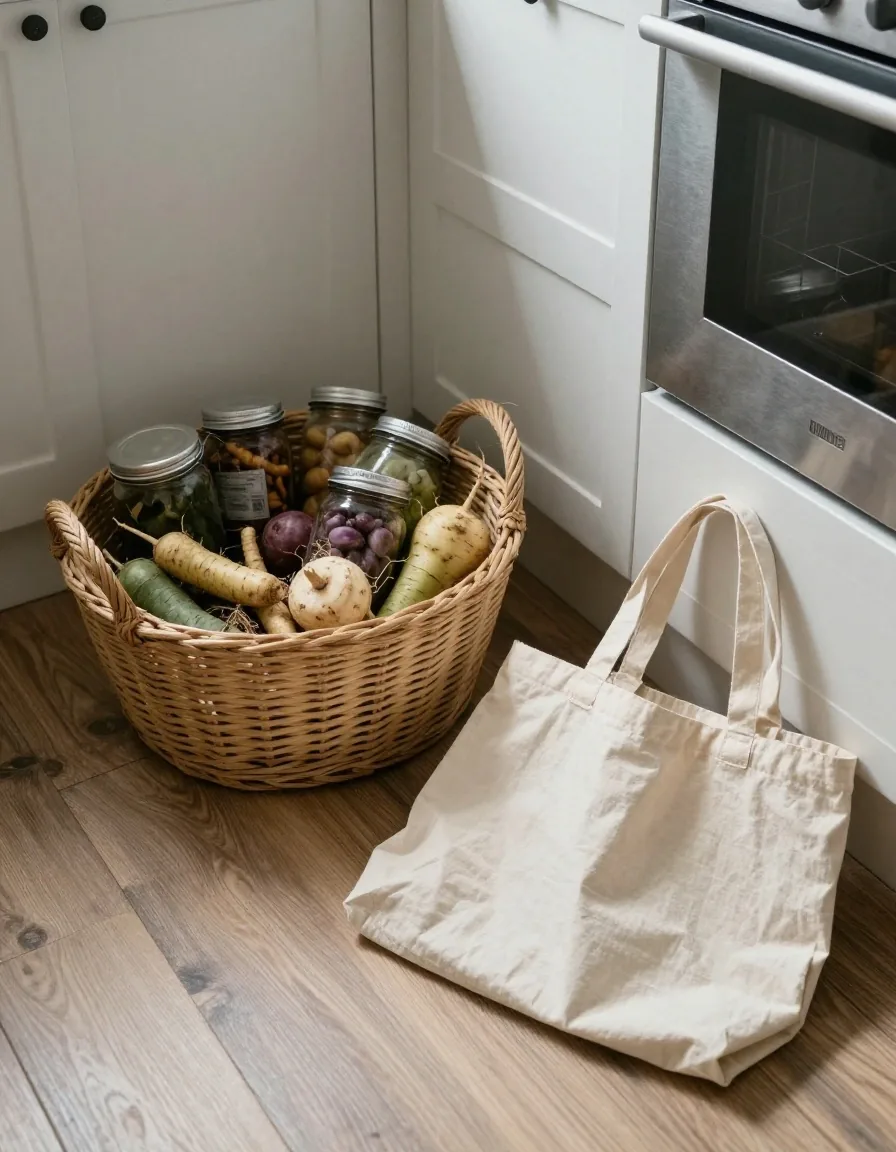
Loose fruit and veg from the supermarket, greengrocer or market stall, taken home in a reusable produce bag rather than a pre-packed tray.
Bread from a bakery or in a paper bag, which also freezes well if you buy more than you eat in a week.
Dry goods from a refill shop or supermarket bulk section, weighed into the jars you brought along.
Milk in a returnable glass bottle if you have a milk round nearby; the bottles go back on the next delivery.
Cheese and meat from the counter with your own container, which the deli will usually accept happily.
Cleaning supplies from a refill concentrate and soap in bars, which cut a surprising amount of plastic from a weekly basket.
Coffee from a refill, or a roaster that sells beans into your own bag — the same trick works for tea.
If you are building a zero waste starter kit, start with a produce bag, one lidded jar and a shopping tote. Everything on the list above can be bought with those three items and a bit of planning, and the rest of the kit tends to suggest itself as you shop.
Common questions
Shopping questions, answered plainly
Is bulk buying always cheaper?
No. It is cheaper when the item is shelf-stable and you will use it before it spoils. For perishables, buying smaller amounts usually saves money.
How do I know if packaging is recyclable?
Check your local council’s recycling page. Front-of-pack labels are not a reliable guide because collection rules vary by area.
Are refill shops more expensive than supermarkets?
Sometimes per unit, often less per use once you stop buying containers. Prices vary, so it is worth comparing locally before you decide.
What’s the single best shopping change?
Buying less. When you do buy, buying second-hand or in refillable packaging is the next best step.
Questions about a swap, a shop or a label?
Rethink & Reuse is an editorial resource written for UK households. If something on this page does not match what you see in your local shop, tell us and we will look at it again.
42 Bramley Road, London, N14 4HD · +44 20 7946 0821 · Monday to Friday 9:00–18:00, Saturday 10:00–14:00